
Simon the Pharisee was feeling pretty good about himself. He was well-educated in the law, of spiritual repute to those who knew him, and respected enough to throw a party that important people would want to be at. Simon found himself looking forward to the evening of food and great conversation he had planned tonight. Notably, he had issued an invitation to the latest crowd sensation, one Jesus of Nazareth, and had amused himself envisioning the evenings’ conversations where he and his fellow legal experts would exchange winks and glances across the table before posing the next difficult question to the renegade rabbi. The right question would have him tripping on himself and looking the fool that he was. It would be great fun indeed to watch him squirm.
At evening prayer, in a hurry to get home and freshen up before his guests arrived, Simon caught sight of the despicable government man who often made him scramble to find loopholes for keeping what was his out of government hands. Good thing he had a head for law, he mused as he threw the man a contemptuous glance and began his own prayer. How that man could even pray to the same God was beyond Simon.
It was on his heart as he prayed. “God, I thank you that I am not like other people—robbers, evildoers, adulterers—or even like this tax collector. I fast twice a week and give a tenth of all I get.”
God didn’t answer, but Simon hadn’t asked a question and wasn’t listening anyway.
Across the courtyard, the government man stood alone — no one wanted to be close to him. He began the slow, rhythmic beating of his fist against his heart. A motion born of agony that he had felt a hundred times before. He sensed the holiness of God, but knew the degradation of mankind. He had wanted something different for his life, but circumstance and need had driven him to this position where he felt hated by his own. He came to the temple often, but never felt like he belonged.
“God, have mercy on me, a sinner,” came the almost guttural cry. But, in a hurry to get home, Simon — the religious specialist, the one who could have been a shepherd of hearts — was long gone. He carried himself with the importance of a busy man. No time for mercy or compassion. And certainly no time for friendship with a person who was beneath him.
At home again, Simon breathed a sigh of relief. The business of church in a culture of foreign gods and political intrigue was wearing. His thoughts turned again toward the table of important people who would soon gather. Would that crazy rabbi sense the noose tightening around his neck tonight, or was he so caught up in sharing his version of God with the world that he would blindly stumble into the trap? It would be a fun night, but it was an important one too — and he prayed to God that the truth would be revealed.
God heard, and so as dinner began, a woman appeared at the feet of the Rabbi Jesus and began weeping. It was the slow, rhythmic drip of a broken and contrite heart. A motion born of shame that she had known a hundred times before. She sensed the holiness of God, but knew the degradation of mankind. As Simon watched, he became more and more agitated, wondering why the young rabbi did nothing to stop the debacle. As her tears fell on Jesus’ feet, the woman — well-known around town for her sinful ways — moved closer, now using her hair as a towel to wipe the tears away. How did she get in, and when, dear God in heaven, would the man she was accosting ask her to leave? Simon felt his anxiety skyrocket and the familiar tic in his jaw start as he clenched both teeth and fists. But she moved closer still, bowing completely to bring her sinner’s mouth to Jesus’ feet in a kiss, again and again, and then wasting some truly exquisite perfume on his feet.
The sight, sound, and smell charged the room, and suddenly it didn’t seem to belong to Simon the Pharisee. All the interesting conversation stopped. All the good food and drink were forgotten, and all eyes were on the host of this little soiree and the rabbi who claimed to be Messiah.
“Simon, I have something to tell you,” the rabbi’s voice wasn’t loud, but everyone in the room heard it.
“Tell me, teacher,” he said, in his best convivial tone, masking an angry awareness that the rabbi had used the word “tell” rather than “ask.”
“Two people owed money to a certain moneylender. One owed him five hundred denarii, and the other fifty. Neither of them had the money to pay him back, so he forgave the debts of both. Now which of them will love him more?”
Simon replied, “I suppose the one who had the bigger debt forgiven.”
“You have judged correctly,” Jesus said.
Then he turned toward the woman but kept his eyes locked with Simon’s, “Do you see 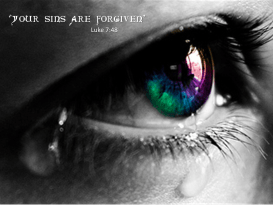 this woman?” Again the tone was soft but urgent, and carried the room. “Do you see this woman? I came into your house. You did not give me any water for my feet, but she wet my feet with her tears and wiped them with her hair. You did not give me a kiss, but this woman, from the time I entered, has not stopped kissing my feet. You did not put oil on my head, but she has poured perfume on my feet. Therefore, I tell you, her many sins have been forgiven—as her great love has shown. But whoever has been forgiven little loves little.”
Then the un-honored guest turned to the dis-honored woman, because, unlike Simon the Pharisee he had seen her, and knew far more about her than her reputation. “Your sins are forgiven,” he said, locking eyes with her in a holy embrace that no one had offered her in a long, long time. The room buzzed to life again, for here was a new topic for their legal minds to work on.
And so the story goes. For self-made saints like Simon the Pharisee, there are prayers to be intoned, laws to be interpreted, and riff-raff to be avoided. For the broken who know it, however, there is relief in locking eyes with Jesus.
 asipoblog.com